IKIGAI × AEON logo
AEON Eastern Fresh & ESG Hub
Investment Decision Case · V1 · Jul 2026
Investment decision case — prepared for AEON Vietnam · AEON TOPVALU · AEONMALL Vietnam

Not a 40-hectare farm.
An Eastern Fresh & ESG Hub.

A stage-gated proposal to turn a 40-hectare site near Bảo Chánh station, Xuân Lộc, Đồng Nai into AEON's control point for a fresh-supply and product-innovation platform — one that scales through a grower network, not simply through more hectares.

Choose a chapter · arrow keys to navigate
Investment Thesis & Demand
Strategy & Portfolio
Revenue, Roadmap & Capital
Risk & Decision
01 · Investment Thesis & Demand

40 hectares is not the business. It's the control point.

AEON is not being asked to fund a farm. It is being asked to validate a controlled nucleus — an Anchor Farm, Fresh Supply Hub, Product Innovation Platform, QA/Traceability Control Center and ESG showcase — that proves quality, traceability and unit economics before supply scales through a surrounding grower/cooperative network.

40 ha
controlled anchor site — the nucleus, not the ceiling
50–100+ ha
Year-3 grower-network target (scenario)
145–230bn VND
recommended 3-year funding envelope, stage-gated
3
AEON stakeholders, one coordinated case

"Build a repeatable fresh-supply platform — not simply maximize output from 40 hectares."

The five questions this deck answers
  • What exactly are we asking AEON to consider — a farm, or a supply-chain control point?
  • What business problem does this solve better than AEON's existing suppliers?
  • How should the land be used, given demand is still unproven?
  • What should be invested, and when should each tranche of capital be released?
  • Under what conditions should the project be held, pivoted, or stopped?
Go

90-day due diligence — legal, soil, water, buyer and logistics baseline. Near-zero capital commitment.

Go conditional

2–5 ha pilot, 2–3 SKUs, only once a buyer brief and site-fit are confirmed.

This proposal replaces the V2 "40ha Clean Agriculture + Agri-PV + Experience Farm" framing — see Chapter 02 for what changed and why.
02 · Investment Thesis & Demand

Six corrections, one strategic reframing

V2 pitched a farm anchored to a single mall opening. This proposal is a platform case: flexible land allocation, a multi-node demand base, and capital released only against evidence.

DimensionV2 · supersededThis proposal
PositioningFeedstock zone + Agri-PV + experience farmFresh Supply & Product Innovation Hub, expandable via a satellite grower network
Land allocationFixed 24 / 8 / 4 / 4 ha from day one8–12 ha held flexible through Year 3; land is locked only against market evidence
Perennial cropsLarge share committed up front3–5 ha strategic pilot only; avoids monocrop and long capital lock-in
AEON counterpartTreated as one uniform partnerSplit into AEON Vietnam, AEON TOPVALU, AEONMALL Vietnam — three narratives, one case
EnergyA primary investment pillarCost-optimization + ESG layer; rooftop-first, field Agri-PV is an option
TourismA parallel development trackScales only after visitor traffic and unit economics are proven
Capital approachWhole-site vision, single commitmentStage-gated: Prove → Scale → Hub
Content corrections in this version
AEON MALL Trấn Biên's opening year, ~10M visitors/year and "8-floor final configuration" were presented as confirmed in V2. The official investment announcement does not currently fix an opening date — these are now treated as assumption, not fact.
"Produce ready for Trấn Biên's opening day" is removed as a business-case anchor. The supply thesis now rests on a multi-node AEON network (Chapter 05), not one mall's timeline.
"PA3 Agri-PV + PA4 Experience run in parallel" is replaced by a demand-led sequence: buyer validation → conditional offtake → co-development → hub scale-up, with energy and experience as options (Chapter 07).
Decree 135/2024 is no longer treated as the governing energy framework — see the rooftop-first note in Chapters 07 and 12.

The project must remain economically viable without field-mounted Agri-PV, tourism revenue, carbon credits, or any single AEON MALL opening date.

03 · Investment Thesis & Demand

Already farmed, already wired — but not yet fully known

Identification pointBùi Gia Trang 1 – Thanh Long Ruột Đỏ, Xuân Phú, Đồng Nai Evidence
Coordinates / Plus Code10.9352253, 107.3244713 · W8PF+3Q Evidence
Working size39–40 ha — final figure pending cadastral confirmation To validate
AccessĐT.763 / ĐT.772 · Bảo Chánh station (Bắc–Nam railway) · QL1A via Gia Ray – Long Khánh Evidence
Site pin: 10.9352253, 107.3244713 · Plus Code W8PF+3Q — Bảo Chánh station area, Xuân Phú, Xuân Lộc, Đồng Nai.
QR code — opens the site location in Google Maps
Scan to explore the location
Opens Google Maps at the exact site pin — for joint site visits and field teams, no coordinates to retype.
Evidence — field survey, Jul 2026
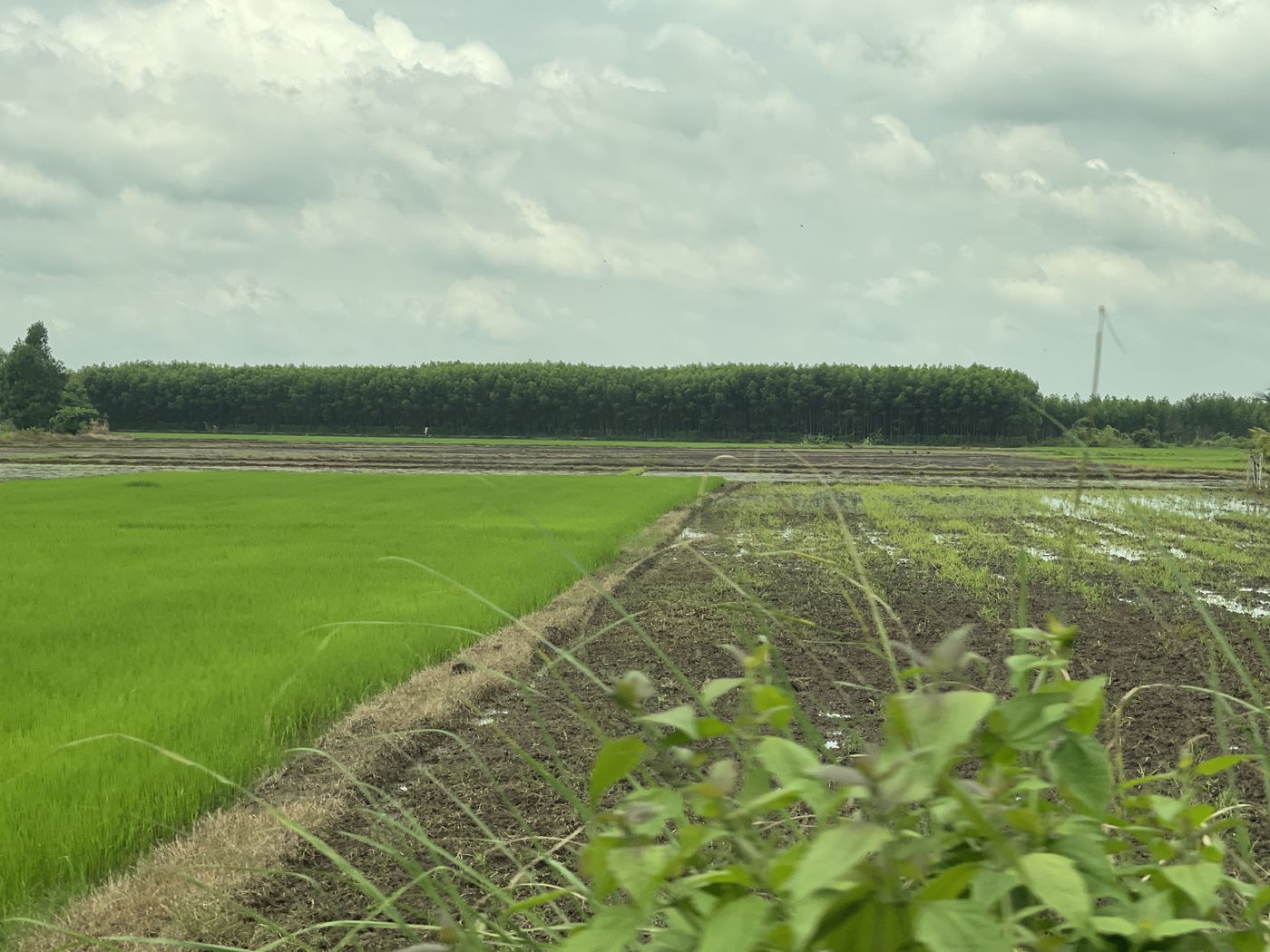
  • Low-lying zone along the access road: rice cultivation, active irrigation canal network
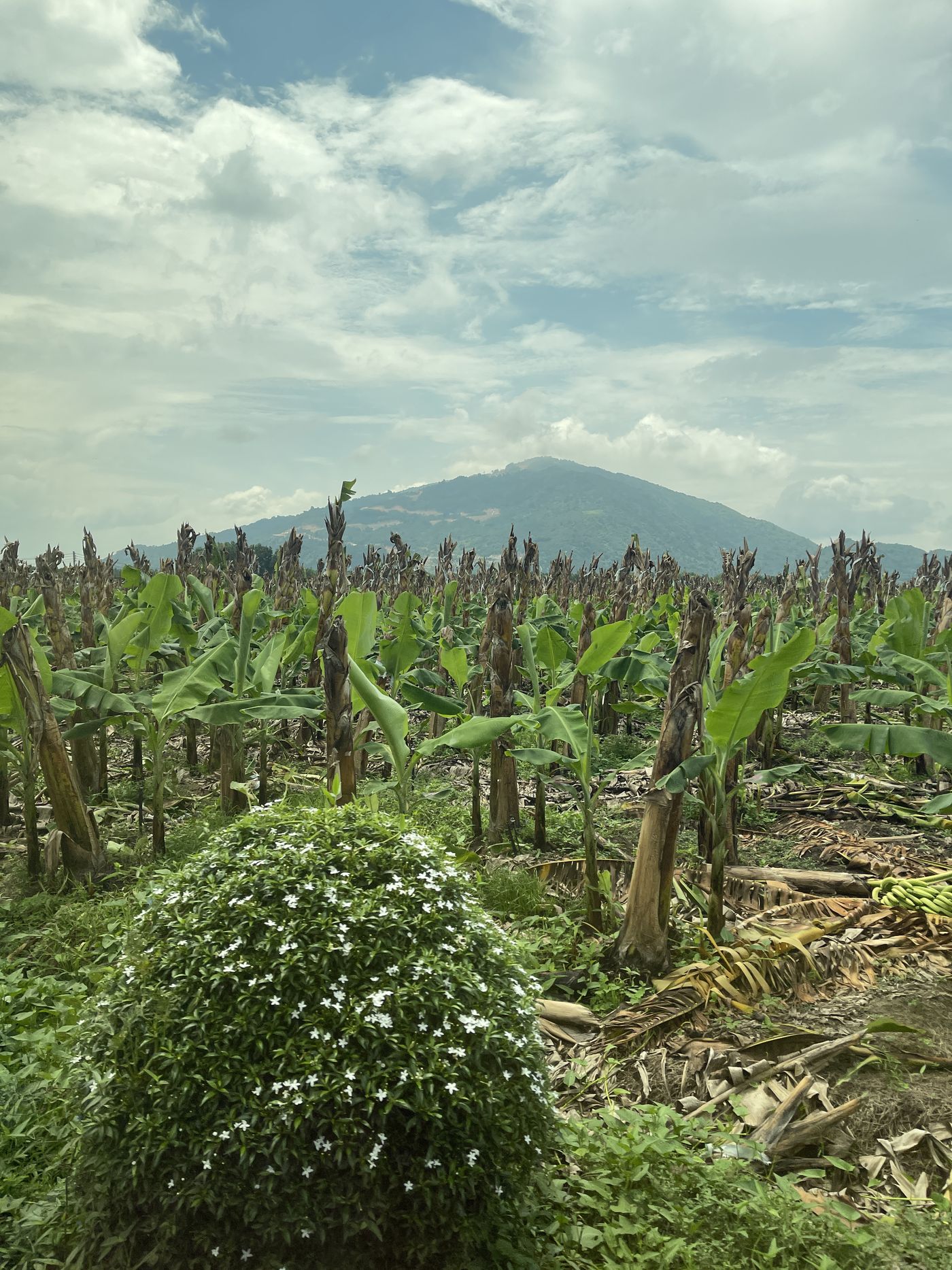
  • Higher basalt red-soil zone: existing dragon-fruit (thanh long ruột đỏ) orchard plus row crops
  • Power lines already run into the production area; adjacent operating solar farm confirms grid-connection readiness
Assumption — regional context
  • Groundwater in the basalt belt at ~25–30m, reported good quality
  • ~82% of the Xuân Lộc workforce reported as VietGAP/greenhouse-trained
  • Regional irrigation network (Núi Le, Gia Măng reservoirs) reported as well-invested
To validate — 90-day plan
  • Parcel-level legal status, cadastral map, zoning and rice-land conversion procedure
  • Elevation / drainage survey and dry-season water balance
  • Geo-tagged soil and water sampling; existing dragon-fruit yield and P&L history

Full six-photo field-survey evidence set: Chapter 04.

04 · Investment Thesis & Demand

What the July 2026 survey actually saw

Photo and video documentation covers the low-lying rice area and its canal network, the higher basalt red-soil area, the existing access road, the adjacent solar farm, and the Bảo Chánh station junction. Full original material is archived and available on request.

Perennial-crop rows on the basalt red-soil zone, Chứa Chan mountain on the horizon
Basalt red-soil zone
Perennial-crop rows, Chứa Chan on the horizon
Rice paddy and canal network in the low-lying zone
Rice paddy & canal network
Low-lying zone along the access road
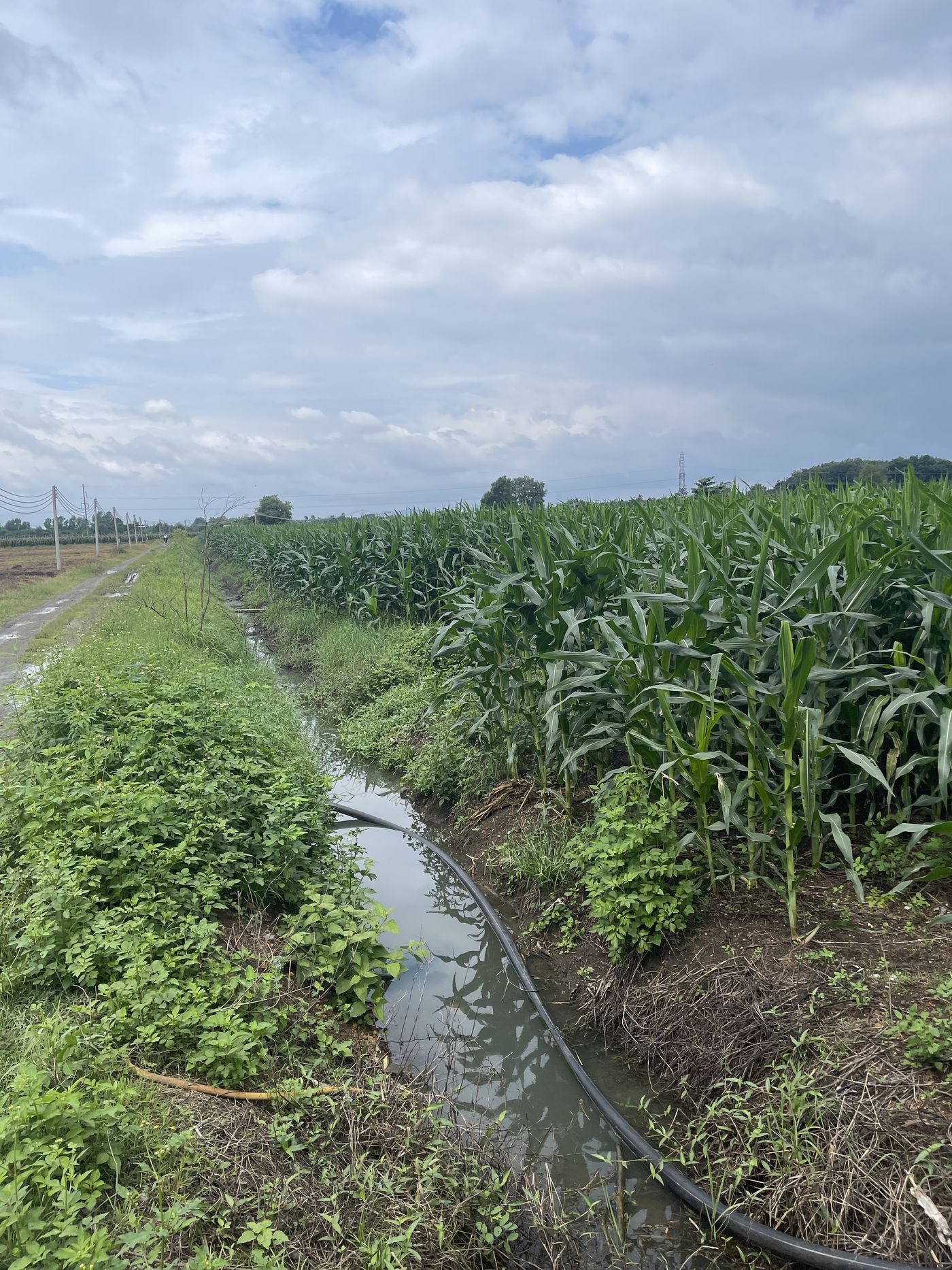
Active irrigation canal feeding row crops, power line overhead
Active irrigation canal
Row crops fed by canal; power line overhead
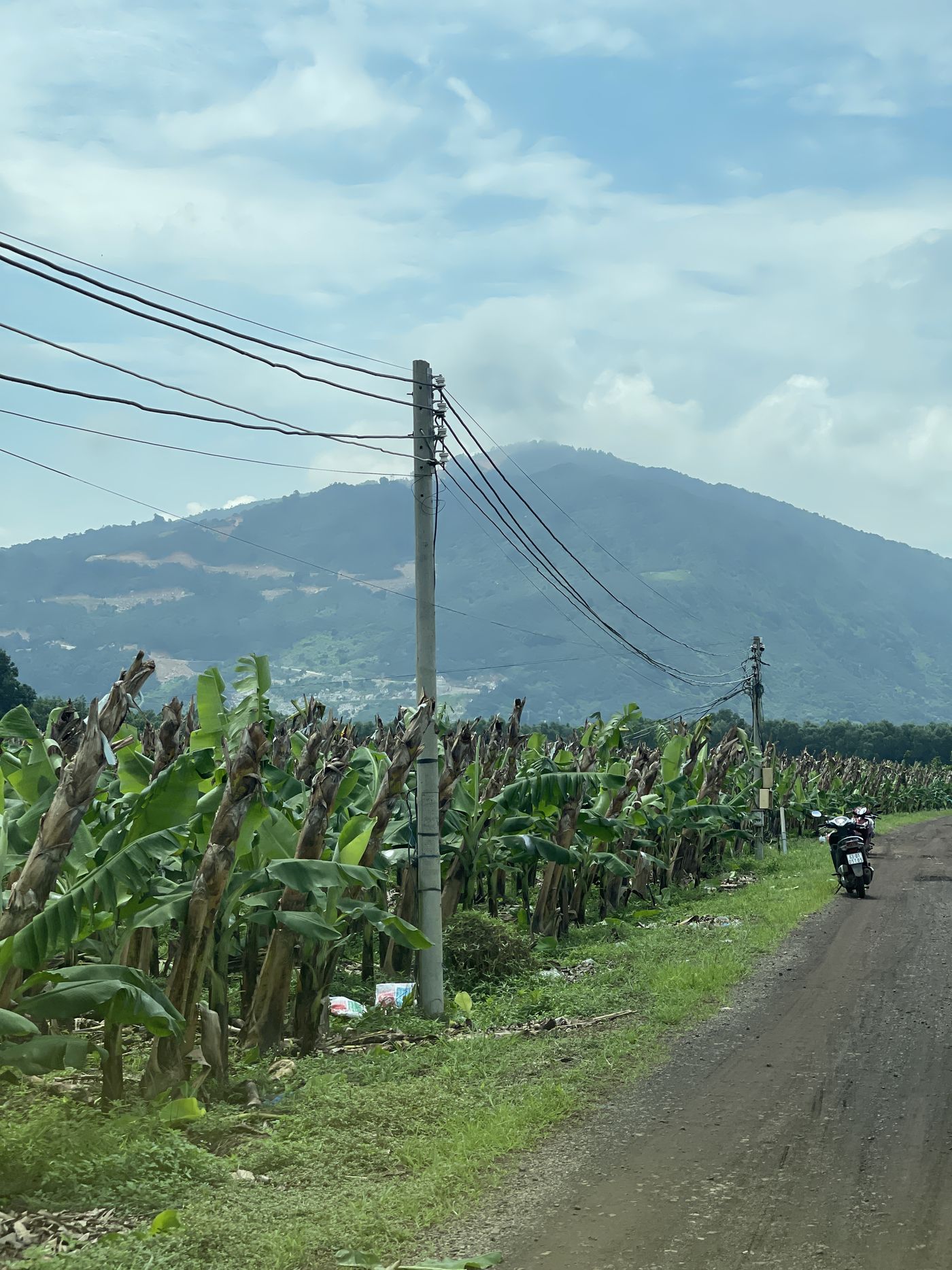
Site access road with existing power poles, Chứa Chan in the distance
Site access road
Existing power line; Chứa Chan in the distance
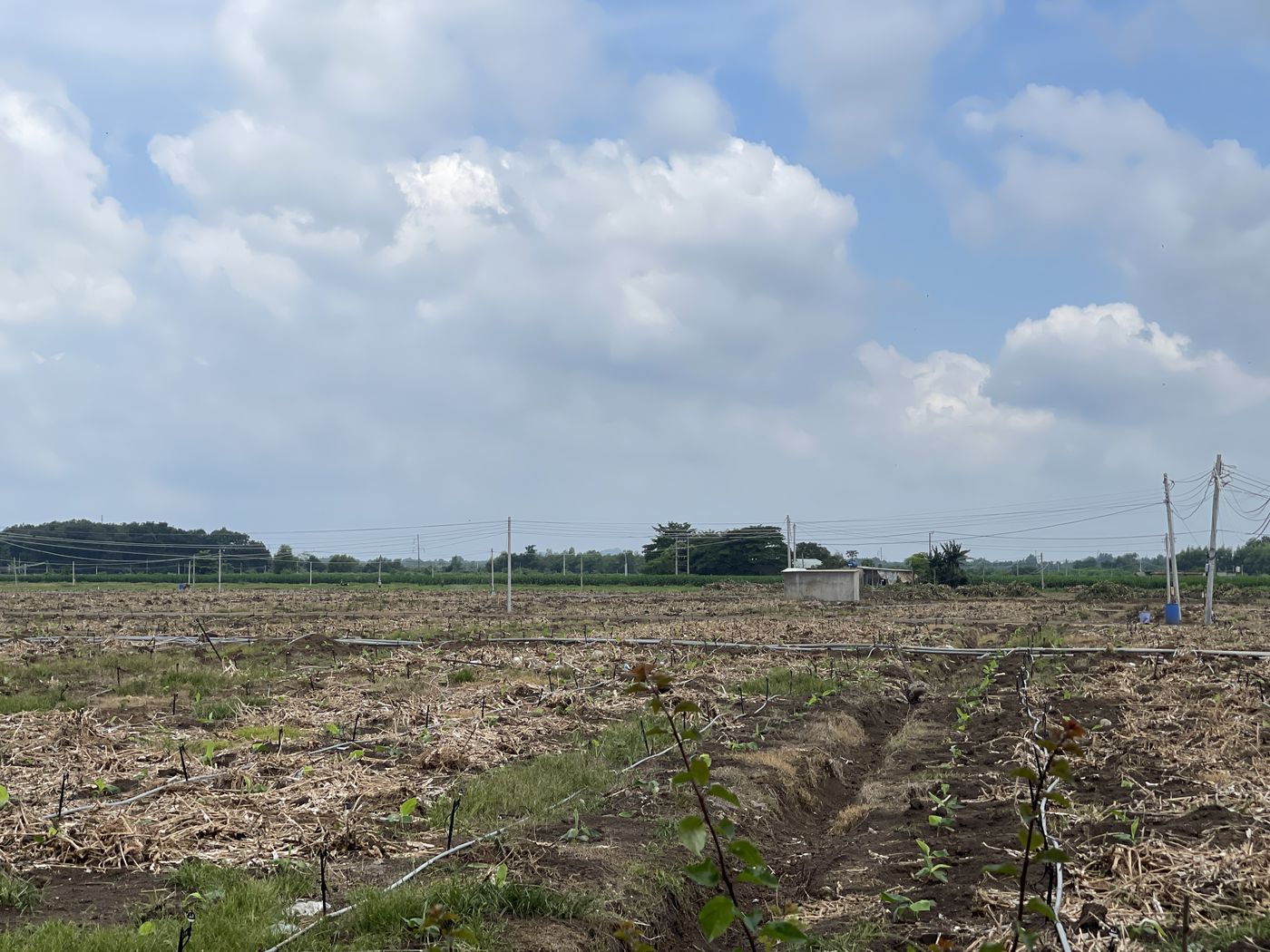
Recently cleared plot with drip-irrigation lines and a grid connection point already in place
Recently cleared plot
Drip lines & grid connection already in place
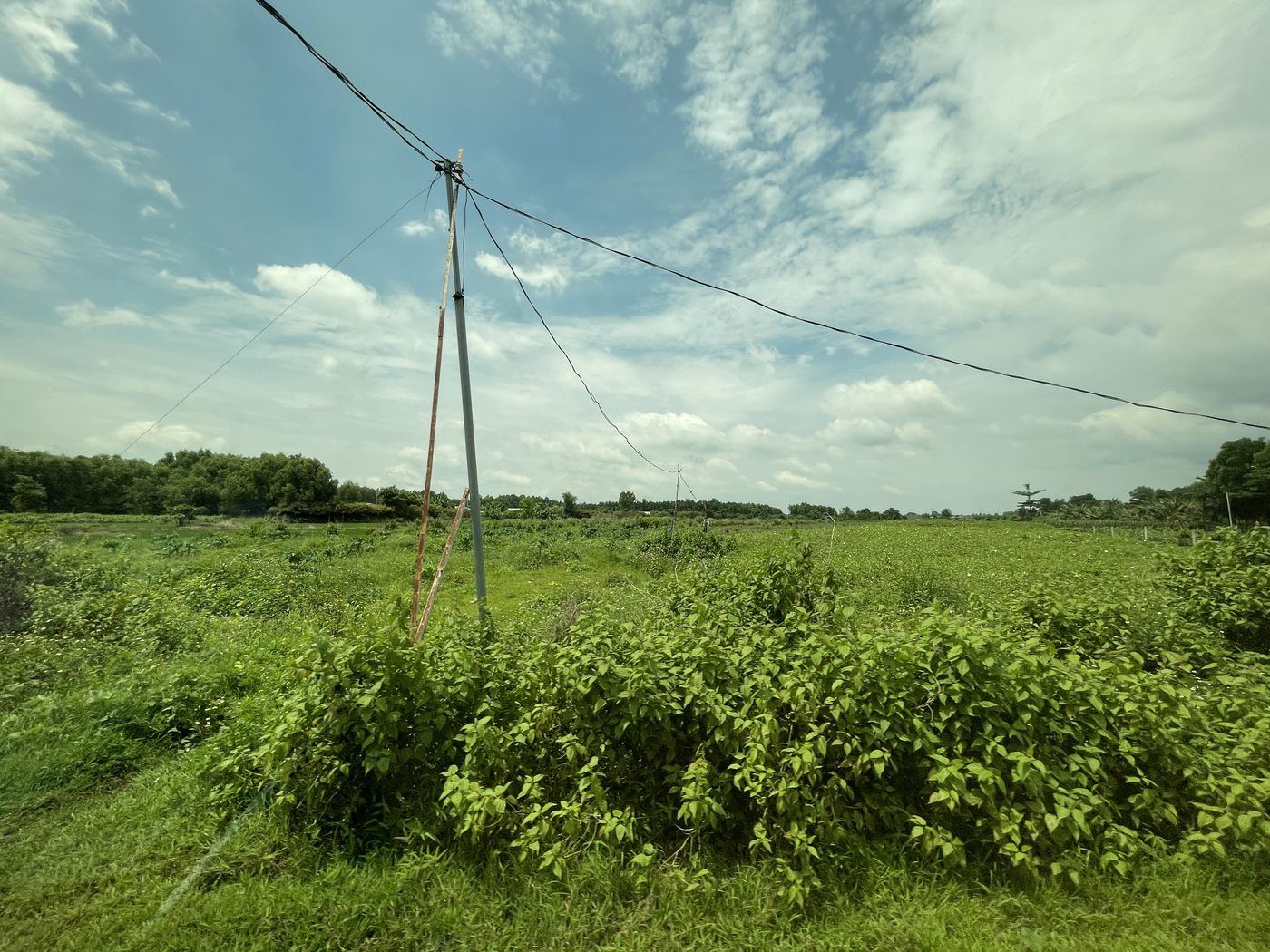
Open low-lying field crossed by an existing power pole
Open low-lying plot
Flat field crossed by an existing power line

Six of the July 2026 field-survey photos above; solar-farm and Bảo Chánh station angles are still being selected and will be added in the next material update. Full original photo/video set is archived and available on request.

05 · Investment Thesis & Demand

The site is not dependent on one future mall

Three existing AEON MALL nodes plus one announced future node form the firm base case within roughly 100km. A fifth, potential node stays in the pipeline case only.

SITE Trấn Biên ~51km Bình Dương ~67km Tân Phú ~79km Bình Tân ~81km Hóc Môn pipeline
Existing AEON MALL — firm base-case demand
Announced future node (Trấn Biên) — investment decision confirmed, opening date not fixed
Potential pipeline node (Hóc Môn) — status unconfirmed, excluded from base case

Schematic decision map, not to geographic scale. All distances are preliminary straight-line estimates from site coordinates — GIS and refrigerated-truck routing validation required before entering any financial model.

AEON nodeStatusPreliminary distanceMeaning for the project
AEON MALL Trấn BiênInvestment decision announced; opening date not yet fixed~51km straight-line · ~65–70km road estimateNearest node; important upside, not the only outlet
AEON MALL Bình Dương CanaryExisting~67kmExisting demand; usable for market testing
AEON MALL Tân Phú CeladonExisting~79kmLarge HCMC node; fits fresh/premium segment
AEON MALL Bình TânExisting~81kmExisting demand, western HCMC
Hóc Môn (pipeline)Potential pipeline only; status unconfirmed~80km (area)Not included in firm base-case demand
Why the 100km radius matters operationally
Demand catchment· Distribution-center hypothesis· Vendor consolidation· Cold-chain routing· Same-day / next-day fresh logistics

Additional data required: road distance and refrigerated-truck time by season and time-of-day, actual delivery points (store / DC / cross-dock), delivery frequency and MOQ, and logistics cost per kg by cluster.

06 · Investment Thesis & Demand

Three different buyers. One coordinated case.

AEON is not one counterpart. Three stakeholder groups need three different value propositions — pitching the same deck to all three is the fastest way to convince none of them.

StakeholderRoleWhat they needDocument to prepare
AEON VietnamFresh food procurement / retailer operatorQuality, volume continuity, price, traceability, logisticsSupplier / Offtake Business Case
AEON TOPVALUProduct development / private labelSpec repeatability, processing potential, cost structure, export readinessProduct Innovation Deck + Trial Data
AEONMALL VietnamMall developer / ecosystem partnerCommunity, ESG, placemaking, customer engagementESG & Customer Engagement Proposal
AEON Retail Japan / regional (potential)Future export or regional channelScale evidence, compliance, export-grade consistencyNot pursued before Year-3 evidence
Four levels of cooperation, rising commitment
Level 1 — Buyer Validation: lock SKU, volume/week, grade, size, packaging, MRL, reject rule, delivery point and price formula.
Level 2 — Conditional Offtake: purchase contract by volume band; not exclusive to total production.
Level 3 — Product Co-development: a "Xuân Lộc — Selected for AEON" line, or a private-label candidate.
Level 4 — Strategic Investment / JV: discussed only once the pilot proves unit economics, supply reliability and scalability.

Do not pitch the same proposal to all three stakeholders — the coordinated case is built from three distinct narratives, sequenced through the same four levels.

07 · Strategy & Portfolio

Farm economics → platform economics

40ha farm
Anchor Farm
Fresh Supply Hub
Product Innovation Platform
Grower Network — 50–100+ ha by Year 3
Three value layers, one nucleus
Supply

Standard-setter, not just producer

Registered growing-area codes, traceability and QA protocols proven on 40ha, then licensed out to satellite growers.

Product

Innovation platform

A trial center for TOPVALU co-development — grade, spec and processing-route testing before any private-label commitment.

ESG & Brand

A demonstration platform

Rooftop solar, water stewardship and a grower network AEON can point to as a supply-chain sustainability story — not a resort.

"Build a repeatable fresh-supply platform, not simply maximize output from 40 hectares."

08 · Strategy & Portfolio

Not "what sells highest." What clears eight tests at once.

Crop and SKU selection is weighted across demand, margin, cash-flow speed, agro-climatic fit, quality control, automation, resilience and by-product value — not by market price alone.

AEON / TOPVALU relevance — buyer-confirmed SKU, volume, grade?
25%
Margin potential per hectare — contribution margin after reject, logistics, processing
20%
3-year cash-flow contribution — time to first commercial harvest
15%
Agro-climatic fit — actual yield potential by sub-plot
15%
Quality standardization — control of size, Brix, residue, shelf life
10%
Automation potential — reduced dependence on seasonal labor
5%
Climate resilience — off-season rain, drought, waterlogging risk
5%
Waste / grade B-C utilization — fresh-cut, dried, frozen, purée routes?
5%

Weights reflect the BA team's desktop model — see Chapter 09 for the resulting portfolio scores and tiering.

09 · Strategy & Portfolio

Four crops deserve pilot capital. Durian does not — yet.

APilot priority
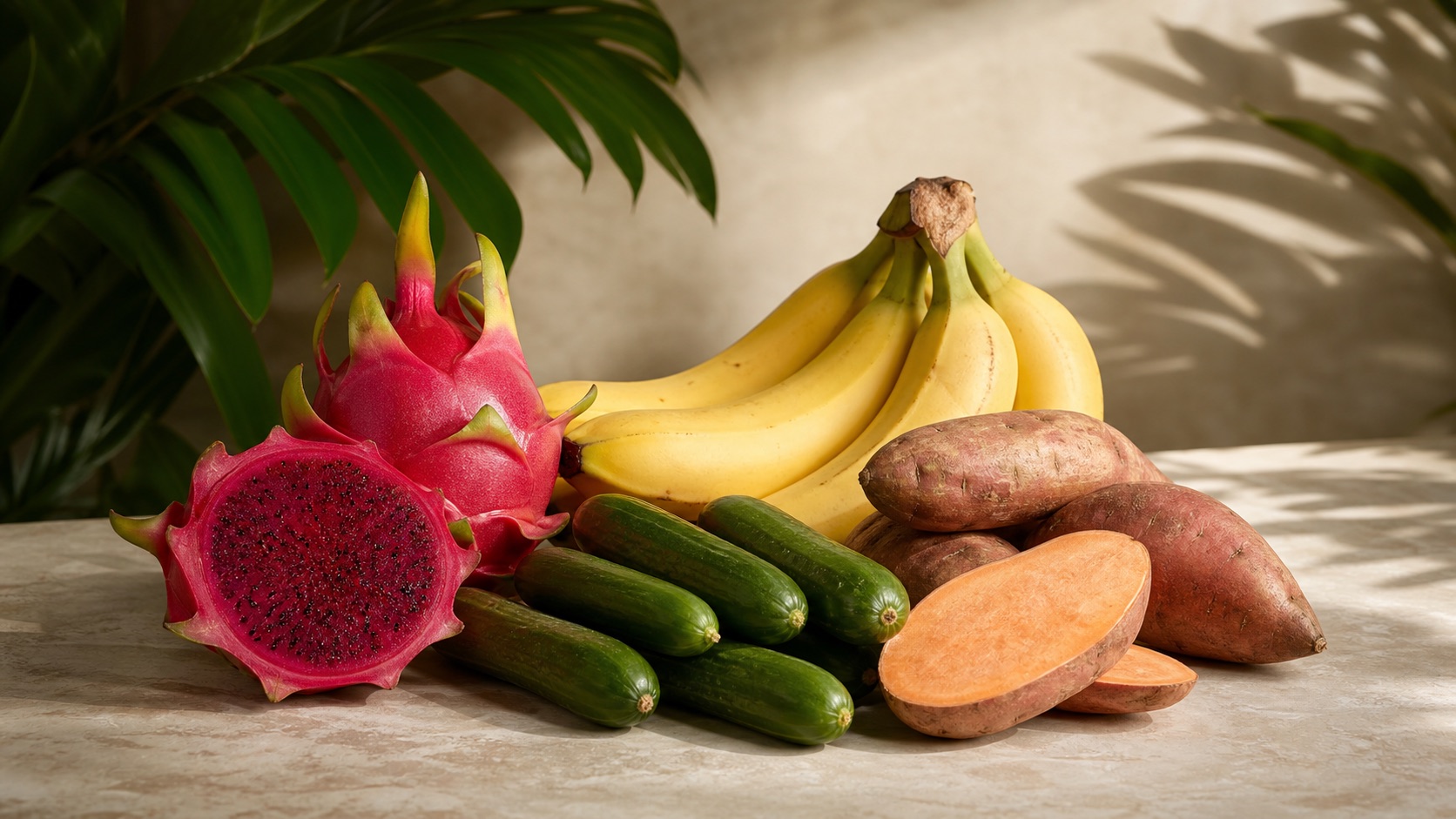
Red dragon fruit4.40
Mini cucumber (controlled)4.15
Sweet potato4.05
Banana4.00
BValidate & scale
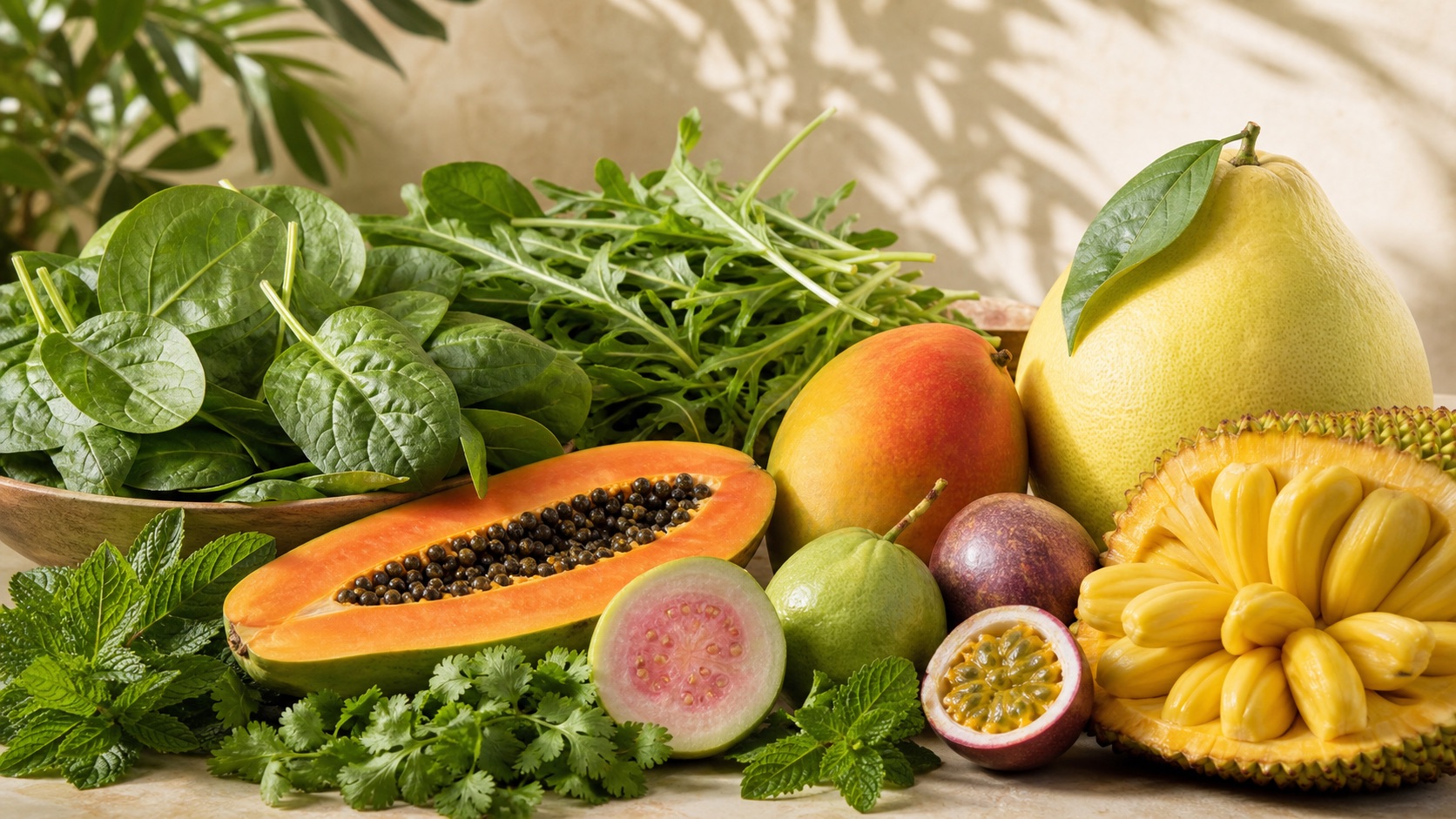
Baby spinach / rocket3.90
Papaya3.90
Guava3.85
Coriander / mint3.85
Mango3.70
Pomelo3.55
Jackfruit3.50
Passion fruit3.45
CStrategic option
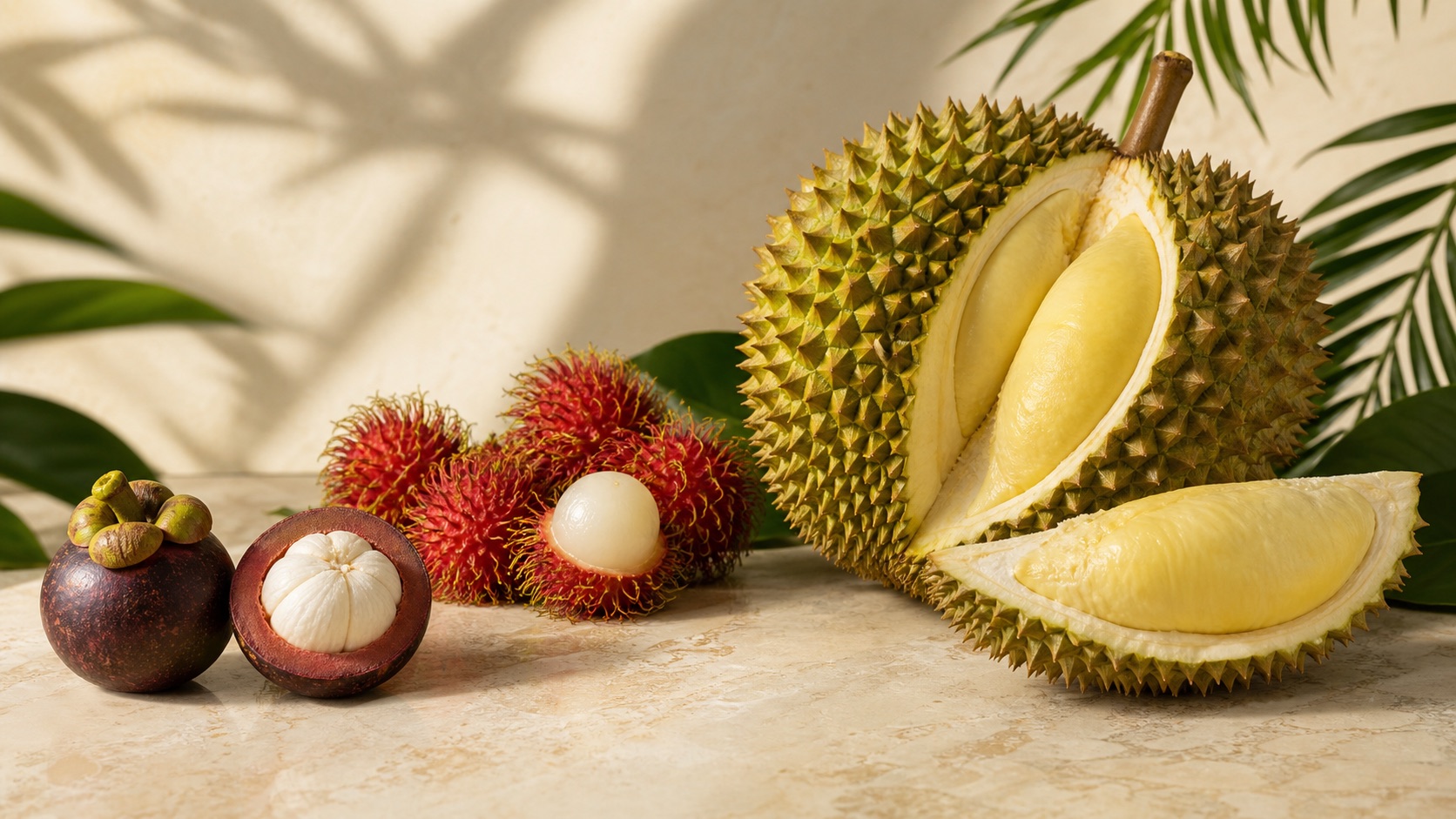
Durian3.15
Rambutan3.00
Mangosteen2.75

Desktop strategic score only — final selection requires soil, water, buyer and pilot validation. Preliminary

Recommended initial pilot portfolio
  • Audit and retain 1–2 ha of existing red dragon fruit where commercially viable
  • 0.5–1 ha controlled cultivation: mini cucumber or leafy greens / herbs
  • 1–1.5 ha sweet potato or another short-cycle root crop
  • 1–1.5 ha banana / papaya / guava mix
Durian — not the 3-year cash-flow engine

3–5 ha Strategic Orchard Pilot only

Positioned strictly as a long-horizon option, entered only after dry-season water balance, drainage validation, soil suitability, 10-year economics and buyer strategy are confirmed — not as the center of the business case.

10 · Strategy & Portfolio

Every grade has a route. None is a forecast yet.

Grade A
Fresh Retail

AEON shelf-ready produce, VietGAP-standardized.

Grade B
Fresh-cut / ready-to-eat

Processed lines for convenience and food-service formats.

Grade B/C
Processing

Frozen, dried, purée, and juice-ingredient conversion.

By-product
Circular value

Compost and biomass; animal-feed pathways subject to feasibility.

Buyer-first rule

No TOPVALU assumption becomes a forecast before SKU, specification, volume/week, packaging, residue standard, price formula and rejection mechanism are confirmed in writing.

Source evidence is used here only as category-relevance evidence — never as confirmed AEON demand.

11 · Strategy & Portfolio

A portfolio, not a fixed subdivision

The old fixed 24/8/4/4 ha masterplan is replaced by a flexible, evidence-locked allocation. Figures below show the Year-3 directional midpoint — not a Day-1 construction plan.

40HA
Year-3 directional allocationIllustrative midpoint of ranges — see exact ranges below
18–25 haProven commercial production
2–3 haControlled env. / R&D
3–5 haStrategic orchard pilot
2–3 haPackhouse / cold-chain
3–5 haWater / drainage / buffer
1–3 haExperience option
RemainderReserve / conversion
18–25 HAProven commercial

SKUs that have passed buyer validation and pilot.

2–3 HAControlled / R&D

Baby vegetables; variety, season and technology trials.

3–5 HAStrategic orchard

Long-horizon asset, entered only under controlled lock-in risk.

2–3 HAPackhouse / logistics

Standardizes quality, extends shelf life, hubs the satellite network.

3–5 HAWater / buffer

Drought/flood resilience and buffer-zone compliance.

1–3 HAExperience option

Expands only after traffic and unit economics are proven.

Rem.Reserve / conversion

Pivot capacity, winning-SKU expansion, or a new component.

Ranges overlap by design and the upper bounds may exceed 40ha in aggregate — this is a stage-gated ambition, not a committed subdivision.

Three funding scenarios — Scenario B is recommended
A · Asset-light pilot
55–85bn VND
3-year funding envelope
C · Full integrated flagship
300–490+bn VND
3-year funding envelope

Stage-gated funding envelope — not Day-1 committed capital. See Chapters 14–15 for the ROM cost breakdown and tranche release plan.

12 · Revenue, Roadmap & Capital

Seven engines. Not one bet.

#EngineSequencingNature
1Fresh ProduceYear 1Core — Grade A sold fresh to AEON standard
2TOPVALU / Private LabelYear 2 explorationUpside — co-developed on pilot data
3ProcessingYear 1 fallbackCore — Grade B/C routed to fresh-cut, frozen, dried, purée
4Packhouse as a ServiceYear 2Upside — sorting/grading/packing/pre-cooling for satellite growers
5Contract Grower NetworkYear 2–3Scale engine — volume without owning/leasing all the land
6Farm ExperienceOptionOption — own P&L; not a 3-year base-case input
7Energy SavingsOption, load-basedAvoided operating cost — not speculative electricity-sale revenue
Approximate sequencing
Year 1
  • Fresh Produce
  • Processing fallback
Year 2
  • Private-label exploration
  • Packhouse-as-a-service
  • Grower network
Year 3 + options
  • Platform-scale supply
  • Product co-development
  • Option: experience, advanced energy

Energy savings are booked as avoided operating cost, never as speculative electricity-sale or carbon-credit revenue.

13 · Revenue, Roadmap & Capital

Every phase ends in a decision gate

0–90 days
De-risk
  • Validate legal, boundary, zoning, soil, water, drainage, buyer brief, logistics and pilot design
Go full 90-day due diligence
Year 1
Prove
  • 2–5 ha pilot; traceability; outsourced cold-chain first; 2–3 SKU validation
Go conditional on buyer brief + pilot KPIs
Year 2
Scale
  • 12–20 ha; build modular packhouse and pre-cooling only once throughput is proven
Go conditional on supply reliability + margin contribution
Year 3
Hub
  • 20–30 ha direct cultivation + 50–100+ ha grower network
Go / Hold on scale & JV decision
Recommended KPI gate
≥70% of planned volume covered by buyer channels before scale
Grade A ≥75% target
Reject ≤5–8%
Positive delivered contribution margin
Dry-season water security confirmed
Repeatable quality demonstrated across at least one full season

Gate states used throughout this deck: GO / HOLD / PIVOT / STOP — see Chapter 21 for the full decision grid.

14 · Revenue, Roadmap & Capital

Do not release VND 145–230bn before the pilot earns it

A · Asset-light
55–85bn VND
18–25 core FTE, Year 1
C · Full flagship
300–490+bn VND
55–80 core FTE
Indicative cost ranges — Recommended scenario, 3-year ROM
Line item3-year ROM range
Site works / road / drainage / water15–25 bn VND
Irrigation / pumps / fertigation / utilities8–15 bn VND
Cultivation establishment8–15 bn VND
Controlled environment12–25 bn VND
Modular packhouse / pre-cooling / cold rooms18–30 bn VND
QA / traceability2–4 bn VND
Rooftop solar / energy5–12 bn VND
Farm equipment / vehicles5–8 bn VND
Experience-light2–6 bn VND
CAPEX contingency / engineering8–15 bn VND
3-year OPEX55–85 bn VND
Working capital / contingency15–25 bn VND

ROM accuracy ±30–40%. Line items are indicative sub-ranges within the 145–230bn envelope; individual sums will not tie exactly due to stage-gate contingency. Excludes land acquisition cost, financing cost and tax unless validated separately.

15 · Revenue, Roadmap & Capital

Four tranches. Each earned by evidence.

T0
90-day validationTrigger: approve pilot only after due diligence
1–3 bn VND
T1
Year-1 pilotTrigger: buyer brief + site fit + pilot design confirmed
20–35 bn VND
T2
Year-2 scaleTrigger: pilot KPIs achieved + throughput justifies modular assets
45–75 bn VND
T3
Year-3 hubTrigger: repeatable quality + grower network + multi-node demand
55–95 bn VND

Do not release the full 145–230bn at Day 1. Each tranche unlocks only when the prior gate's evidence is in hand — see Chapter 13 for the KPI gate and Chapter 20 for the 90-day plan that unlocks T0.

16 · Revenue, Roadmap & Capital

Headcount ramps with the gate, not ahead of it

18–25
Year 1Prove — core FTE
28–40
Year 2Scale — core FTE
35–50
Year 3Hub — core FTE

Seasonal labor peaks separately at 20–50 (Year 1) rising to 40–100 (Year 3) during harvest windows — not shown to scale above, since seasonal peaks are transient rather than core headcount.

Core functions
  • Project / Business Leadership
  • Agronomy & Farm Operations
  • QA / Food Safety / Traceability
  • Packhouse / Cold Chain
  • Grower Network / Sourcing
  • Engineering / Irrigation / Maintenance
  • Finance / Admin / HR
  • AEON Key Account / Product Development
Outsource by design
  • Security
  • Line-haul transport
  • Heavy machinery
  • Seasonal harvesting
  • Accredited laboratory testing
  • Selected cold-storage capacity during pilot
17 · Risk & Decision

No IRR yet. Here's what would move it.

This case does not fabricate an IRR, NPV or EBITDA forecast. It shows the drivers that will determine one, ranked by sensitivity.

SensitivityDriver
Very highYield by SKU · Grade A/B/C split · buyer price / price formula · reject & shrinkage
HighCold-chain cost · packhouse utilization · labor productivity · capex phasing · long-term crop ramp
MediumWater / energy cost
Three scenarios — which decisions change
Downside

Grade A <70%, buyer coverage <70% of volume — hold Year-2 scale, do not fund packhouse capex.

Base

KPI gate met on schedule — proceed T1→T2→T3 as planned in Chapter 15.

Upside

Multiple buyer channels confirmed early — bring forward grower-network expansion, reconsider Scenario C.

No IRR, NPV, payback period, procurement volume, purchase price, TOPVALU listing, visitor number or yield figure is asserted here beyond what the underlying source analysis supports.

18 · Risk & Decision

If this case can't survive these questions, it isn't ready

QuestionRiskResponseAction / decision
Why invest rather than buy from existing suppliers?Reinvents an already-solved supply functionNot asked to invest yet — start from buyer validation and conditional offtakeGo: 90-day due diligence
Does 40ha have enough scale?Too small to matter to AEON's volumeNo — 40ha is the anchor/control hub; scale comes from the satellite networkTrack grower-network KPI from Year 2
Why not lease the land?Forgoes platform/control upsideLower CAPEX but no QA control point, no brand story, no grower-network hubCompared below — Alternative Use A1
Why not sell the land?Realizes value immediately, forecloses upsideRemoves any strategic option value for AEON entirelyNot recommended without a firm alternative-use benchmark
Why not plant only durian?Monocrop, long capital lock-in, no near-term cash flowDurian stays a 3–5ha strategic pilot only, after water/drainage proofHold: full durian conversion
What if Trấn Biên opens late?Business case collapses around one dateBase case must survive on existing nodes and other channelsDownside scenario must remain viable — Chapter 17
What if AEON doesn't buy all production?Buyer-concentration exposureMulti-channel + processing + contract manufacturing; no exclusivity assumedDesign non-exclusive offtake from Level 2
What happens to rejected produce?Grade B/C treated as wasteA processing route is designed from day one — Chapter 10 ladderConfirm processing partner in 90-day plan
Is Farm Experience a distraction?Dilutes focus and capital from the core supply thesisOnly scales once traffic and its own P&L are provenOption, not base case
Is Agri-PV a legal/management distraction?Unresolved dual-use legal framework, agronomic shading riskRooftop-first; field Agri-PV is a later-phase option pending legal clarityOption, working legal reference only
Alternative use — what if AEON does nothing?
CriteriaDo nothingLease landConventional agricultureAEON Fresh HubFull flagship
Capital lock-upNoneVery lowLow–mediumMedium–highHigh
Legal / regulatory riskLowLowMediumMediumMedium–high
Market / buyer riskN/ALowHigh — open market pricingMedium — buyer-concentration managedMedium–high
Land liquidityHighestHighHighReduced — infrastructure committedLowest
Strategic value to AEONNoneMinimalLowHigh — supply control + ESG storyHighest, if executed well
Complexity / management burdenNoneLowMediumHighVery high

The AEON Fresh Hub path does not automatically win on every criterion — it trades higher complexity, management burden and buyer-concentration risk for strategic control and scale option value.

19 · Risk & Decision

Twelve risks, each with a named owner action

Low impact
Medium impact
High impact
High prob.
Crop price volatilityLabor competition
Mall / timeline uncertaintyQuality / residue rejection
Buyer concentrationSingle-crop lock-in
Medium prob.
Tourism traffic overestimation
Land / zoning / rice-land procedureAgri-PV legal uncertainty
Water security / dry seasonFlooding / drainage
Low prob.
Capex overbuild
RiskMitigation
Buyer concentrationNon-exclusive offtake from Level 2; multi-channel and processing routes designed from day one
Mall / project timeline uncertaintyBase case built on existing nodes; Trấn Biên treated as upside, not the anchor
Water security / dry seasonDry-season water balance study before any land is locked to perennial crops
Flooding / drainageElevation and drainage survey in the 90-day plan; buffer-zone allocation in the masterplan
Land / zoning / rice-land procedureParcel-level legal review and conversion procedure started in Days 0–30
Agri-PV legal uncertaintyRooftop-first; field Agri-PV deferred as an option pending formal legal opinion
Crop price volatilityPortfolio of 4+ Tier-A/B SKUs staggered across seasons, not single-crop dependence
Quality / residue rejectionQA/traceability protocol and Grade A ≥75% gate before scale-up
Labor competitionAutomation-by-design; core-staff retention policy; seasonal work outsourced
Capex overbuildModular packhouse and infrastructure only built once throughput is proven — Chapter 15
Tourism traffic overestimationExperience farm scales only after visitor traffic and unit economics are proven
Single-crop lock-inPerennial crops capped at a 3–5ha strategic pilot; no early 24ha commitment
20 · Risk & Decision

Ninety days to replace assumption with evidence

Day 0–30

Site & legal baseline

Parcel-level legal status, cadastral map, zoning, geo-tagged soil tests, dry-season water balance.

Day 31–60

Buyer & product validation

Cold-truck route measurement, at least 3 receiving nodes, buyer brief signed or confirmed, 2–3 SKU pilot design.

Day 61–90

Pilot & investment decision

Pilot crop protocol, expected harvest calendar, downside/base/upside model, capex benchmarks, governance RACI.

Minimum evidence required before Investment Committee
Parcel-level legal status
Cadastral map
Zoning confirmation
Geo-tagged soil tests
Dry-season water balance
Cold-truck route measurement
At least 3 receiving nodes identified
Buyer brief signed or confirmed
2–3 SKU pilot design
Pilot crop protocol
Expected harvest calendar
Downside / base / upside financial model
Capex quotation benchmarks
Governance RACI
21 · Risk & Decision

We are not asking AEON for large-scale capital today

Step 1 — 10-minute buyer / counterpart discovery
Step 2 — 2–3 SKU buyer workshop
Step 3 — Joint site visit
Step 4 — Conditional pilot offtake / LOI
Step 5 — Review investment options after Year-1 evidence
Final recommendation
Go

90-day due diligence

Go conditional

2–5 ha pilot

Hold

Full 40ha cultivation

Hold

Large packhouse / cold-chain capex

Go, based on load

Rooftop solar

Option

Field Agri-PV

Option

Experience farm

"Do not invest in a farm. Invest in the right to find out whether this is a platform — for the price of a 90-day due diligence, not a 145–230bn commitment."

Sources: AEONMALL Vietnam investment-decision press release (Trấn Biên, Jan 16, 2026); AEON Vietnam / AEON TOPVALU public system and product-quality disclosures; Vietnam legal references (rooftop/dual-use solar policy — working reference: Decree 58/2025, as amended by Decree 243/2026); internal field survey, July 2026; internal preliminary desktop estimates. Distances, ROM figures, crop scores and funding ranges are preliminary or assumption-based unless marked Evidence — all require independent verification before release to AEON or the Investment Committee.